



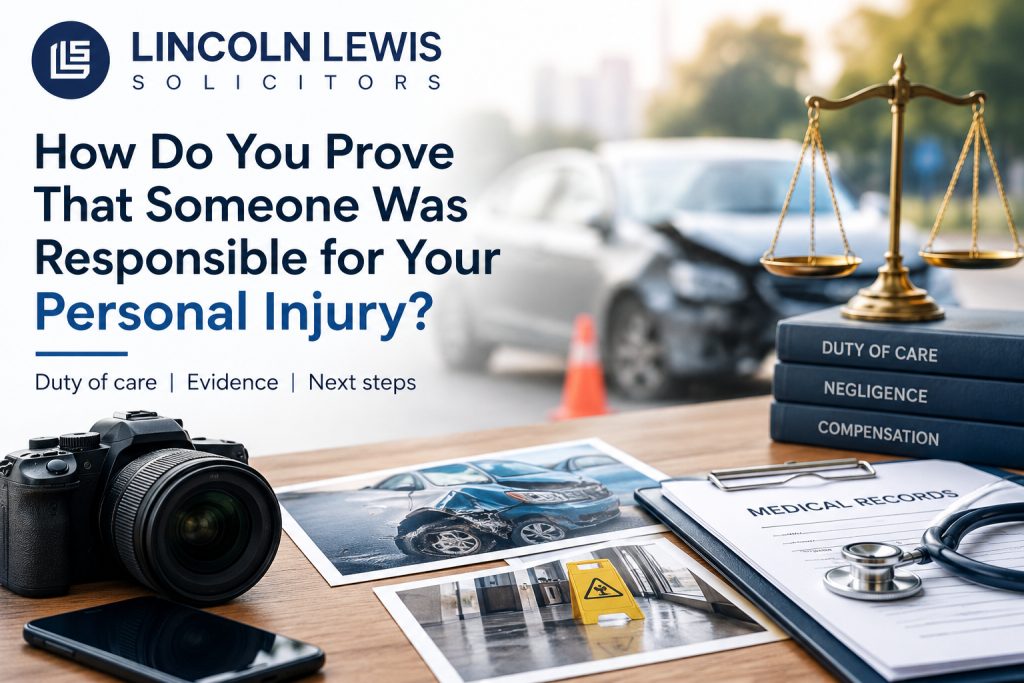
Being hurt because of someone else’s actions is stressful enough. Then comes a second worry: how do you actually prove it was their fault? Insurers and defendants rarely accept responsibility without a fight, so a personal injury claim depends on evidence rather than opinion.
This guide explains what you must prove, which evidence carries the most weight and what to do after an accident. It is general information rather than legal advice, and the rules vary between countries.
What Does It Mean to Prove Liability?
Liability means legal responsibility. To prove someone was responsible for your personal injury, you generally need to show that they owed you a duty of care, broke that duty and caused your injury as a result.
In civil claims the standard of proof is usually the balance of probabilities. In plain terms, you must show that your version of events is more likely than not to be true. You do not have to prove it beyond all doubt.
The Four Things You Need to Establish
1. Duty of care
A duty of care is a legal obligation to take reasonable care not to harm others. Drivers owe it to other road users. Employers owe it to their staff. Shops, restaurants and landlords owe it to the people who visit their premises. This element is usually the easiest to establish.
2. Breach of that duty
A breach happens when someone falls below the standard of a reasonably careful person in the same position. Examples include a driver checking their phone at the wheel, an employer failing to provide safety equipment and a café leaving a spillage unmarked for hours.
3. Causation
This is often the most contested part. You must show that the breach directly caused your injury. If a driver ran a red light and hit your car, the link is clear. If you already had a back problem, the other side may argue the accident changed nothing. Medical evidence helps show what the incident made worse or caused.
4. Loss and damage
You must show that you suffered real harm. That includes the injury itself and any financial losses, such as lost earnings, treatment costs, travel expenses and care needs. Receipts, payslips and medical reports make these losses easy to demonstrate.
What Evidence Helps Prove Fault?
Strong evidence tells a consistent story. The most useful types include:
- Photographs and video: Pictures of the scene, hazards, vehicle damage and your injuries taken as soon as possible.
- Witness details: Names and contact numbers of anyone who saw what happened.
- CCTV and dashcam footage: Footage is often overwritten quickly, so ask for it straight away.
- Accident reports: A police report, an entry in a workplace accident book or an incident report from a shop or venue.
- Medical records: Hospital notes, GP records and specialist reports linking your injuries to the accident.
- Documents: Maintenance logs, risk assessments, training records or emails that show a failure to follow safe practice.
- Financial records: Payslips, receipts and invoices that show what the injury has cost you.
- A symptom diary: Short notes on pain levels, missed work and daily struggles can support your account later.
What Should You Do Straight After an Injury?
How you act in the first few days can shape the outcome of a claim. The easiest way to protect your position is to follow a simple routine:
- Get medical attention, even if the injury seems minor. This protects your health and creates an official record.
- Report the incident to the relevant party, such as your employer, the venue manager or the police.
- Photograph the scene before anything is moved or repaired.
- Collect witness details while memories are fresh.
- Keep every document, receipt and message connected to the incident.
- Avoid posting about the accident on social media. Insurers may use your posts against you.
- Be careful about accepting blame or signing anything before you have taken advice.
Real-World Examples of Proving Responsibility
A supermarket slip. Imagine you slip on a wet floor with no warning sign. Your photographs show the spillage. A witness confirms it had been there for some time. The store’s cleaning log shows no check for several hours. Together, these suggest the store breached its duty to keep customers reasonably safe.
A road traffic collision. A driver rear-ends you at a junction. The police report, dashcam footage and damage to both vehicles point to the other driver’s fault. Your GP and physiotherapy records then connect your neck pain to the crash.
A workplace injury. You hurt your hand on a machine that lacked a guard. Your employer’s maintenance records show the guard had been reported as missing weeks earlier. That is strong evidence of a breach.
What If the Other Side Denies Responsibility?
Disputes are common. The other party may argue the accident was unavoidable or that your injuries are not as serious as you claim. They may also say you were partly to blame.
That last point is known as contributory negligence. If a court agrees you share some responsibility, your compensation may be reduced rather than refused. For example, a cyclist hit by a car who was not wearing a helmet might still win a claim, although the award could be lower. Good evidence helps limit that reduction.
Do You Need a Solicitor?
You are not always required to hire one, but a personal injury solicitor can make a real difference when fault is disputed or injuries are serious. They know which evidence matters and how to obtain it. They can also arrange independent medical reports and deal with insurers on your behalf.
Many firms offer an initial discussion at no cost. Ask clearly how fees work before you agree to anything.
Watch the Time Limits
Claims have strict deadlines, known as limitation periods. In England and Wales the usual limit is three years from the date of the accident or from when you realised the injury was linked to it. Other countries and certain situations set different limits. Delays also make evidence harder to find, so it is wise to act early.
Frequently Asked Questions
What is the first step to prove someone else caused my injury?
Get medical help and record what happened as soon as you can. Photographs, witness details and a written account made while events are fresh give your claim a solid foundation.
What does negligence mean in a personal injury claim?
Negligence means failing to take reasonable care, which results in harm to another person. To prove it, you must show a duty of care, a breach of that duty and an injury caused by the breach.
How can I prove fault if there were no witnesses?
You can rely on other evidence instead. CCTV, dashcam footage, photographs of the scene, accident reports and expert opinion can all support your account. Consistent medical records also help.
Can I still claim if I was partly to blame?
Often you can. Under contributory negligence, a court may reduce your compensation to reflect your share of responsibility rather than rejecting the claim outright.
How long do I have to make a personal injury claim?
It depends on where you live. In England and Wales the general limit is three years. Check the rules for your location or ask a solicitor as soon as possible.
Do I need a solicitor to prove liability?
It is not always compulsory. However, legal help is valuable when the other side denies fault or when your injuries are significant.
What evidence is most important in a personal injury claim?
No single item wins a claim. Strong cases combine scene photographs, witness statements, medical records and documents showing the other party’s failure to act safely.
Proving that someone was responsible for your personal injury comes down to four points: they owed you a duty of care, they breached it, the breach caused your injury and you suffered loss as a result. Clear, early evidence is what turns those points from claims into facts. Seek medical care, document everything and keep your records organised. If fault is disputed or the injury is serious, speak to a qualified personal injury solicitor before time runs out.


